Skip to content
Why use HDPE for Plastic Workboats?
A working boat earns its keep by showing up to the job and not breaking down. HDPE is built for that. It does not rust, does not rot, does not corrode in salt or brackish water, and does not fatigue-crack under repeated load cycling. It absorbs impacts that would dent aluminum or split fiberglass, then returns to shape and goes back to work.
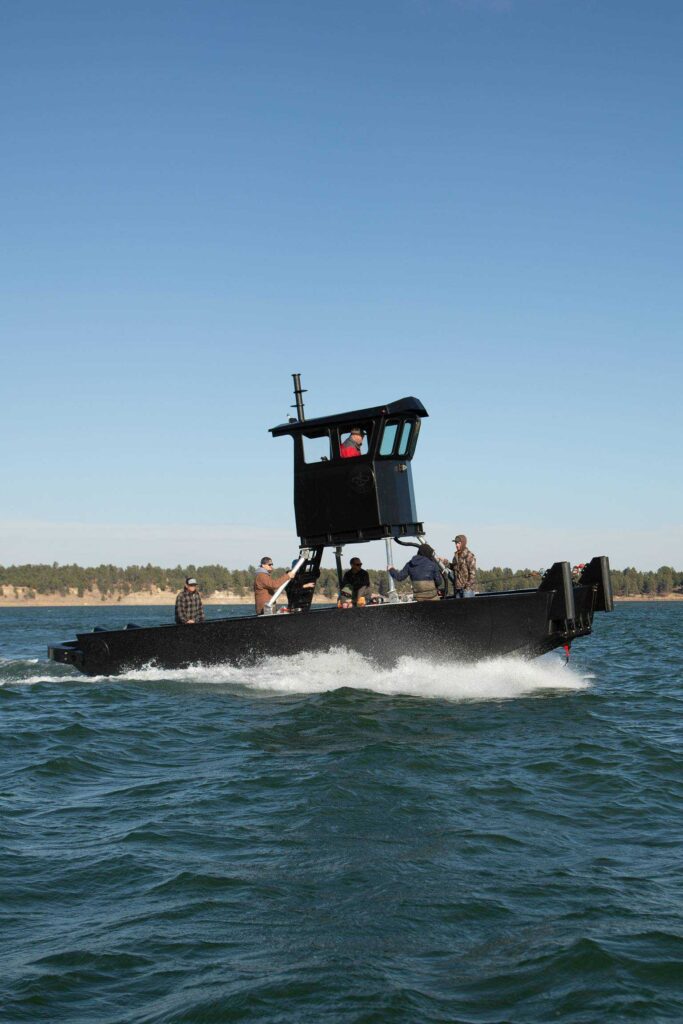
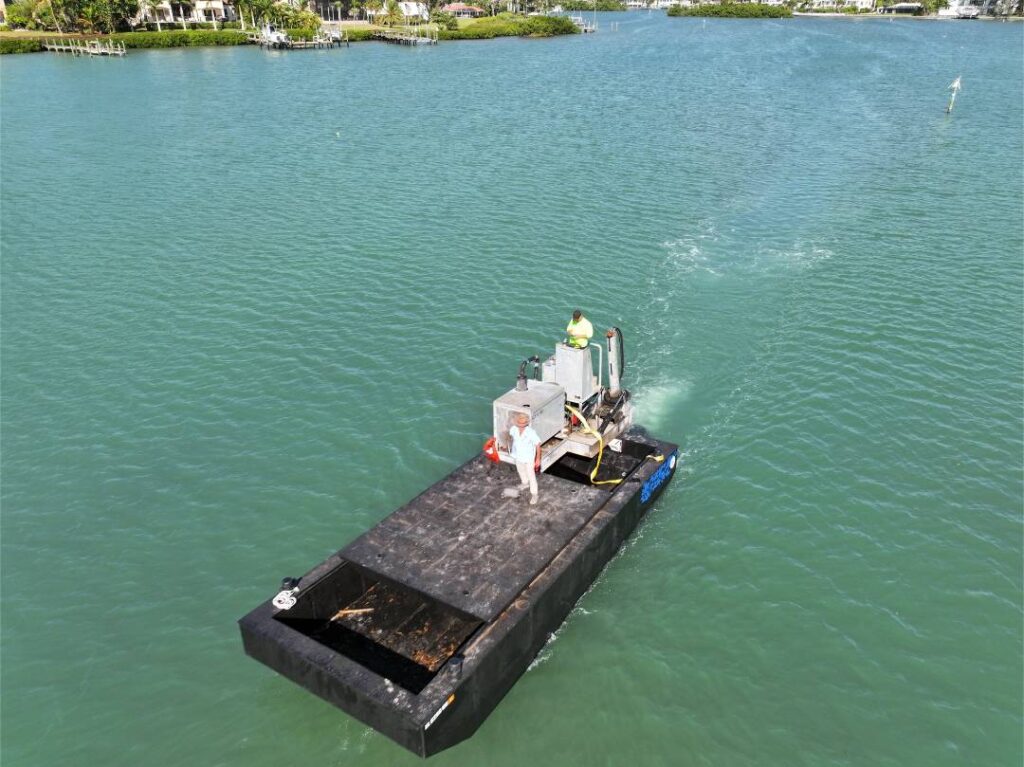
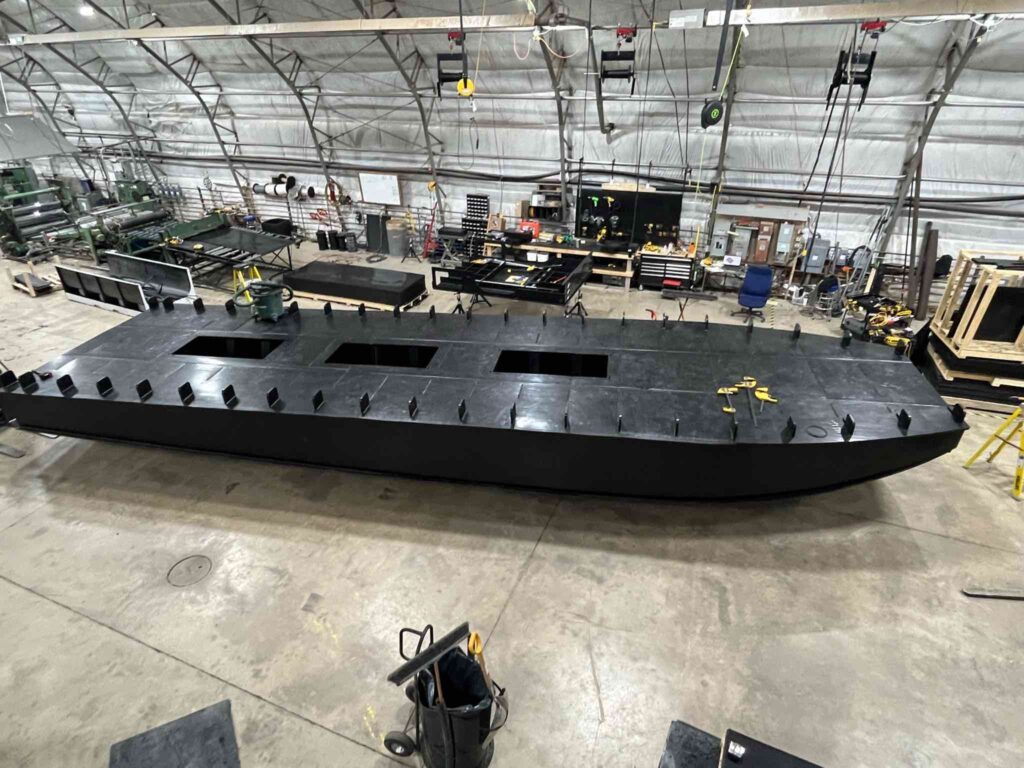
That is why crews running construction barges, utility boats, dredging support, aquaculture rigs, and shoreline survey operations specify HDPE over the materials they grew up on. The hull outlasts the engine. The deck outlasts the paint cycle. The boat outlasts the buyer’s original expectation of what a boat is supposed to do.
The chemistry behind it is simple. HDPE is a thermoplastic polymer with the formula (C2H4)n, built from long, densely packed polyethylene chains. That molecular structure is where the impact resistance, chemical inertness, and UV stability come from. The chemistry shows up on the water as a hull that just keeps working.