
 Skip to content
 One material builds boat hulls, workboat barges, pressure pipe, chemical tanks, and underground electrical conduit. The reason is a specific mix of mechanical, thermal, electrical, and chemical properties. Here is what those numbers actually mean in the field.
Before it is a datasheet, HDPE is a working material. It shows up as the hull of an HDPE workboat that shrugs off a rock strike, as the high-density polyethylene pipe carrying a town's drinking water, as a chemical storage tank that will not corrode, and as the conduit protecting buried power cable. A single polymer covers all of that because high-density polyethylene combines toughness, chemical inertness, cold-weather resilience, and electrical insulation in one recyclable material.
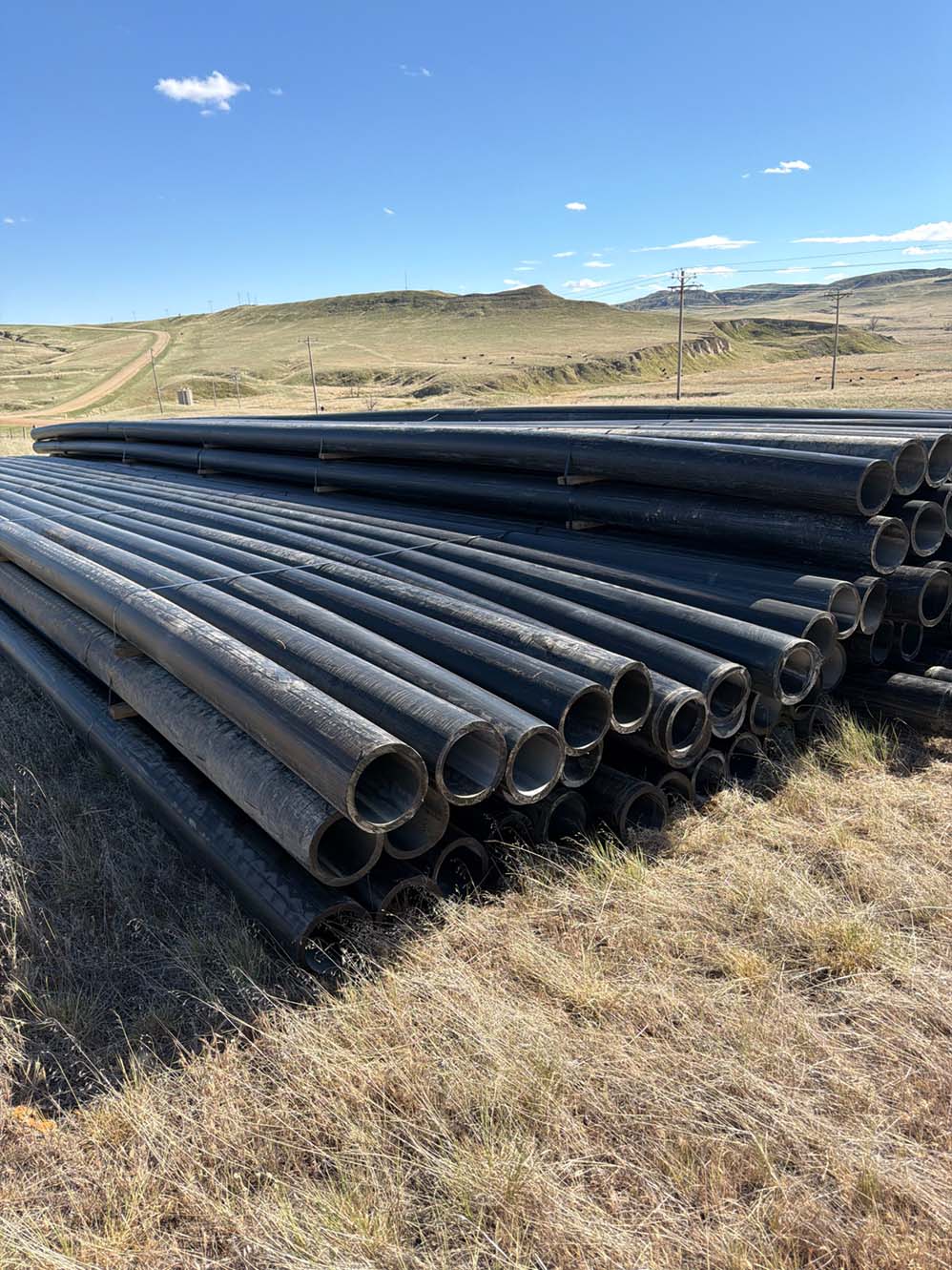
At Legacy HDPE we care about these properties for a practical reason: we recover HDPE from decommissioned oil and gas pipeline, extrude it back into sheet, and fabricate it into boats, barges, and tanks. So the question below is not academic. It is the reason the material earns its place. Here are the properties that matter, what the typical numbers are, and where each one shows up in real work.
Tensile strength. A representative extrusion grade yields at around 25 MPa, meaning the material carries meaningful pulling load before it starts to deform. Across the family of HDPE grades, published values run roughly 26 to 33 MPa, and pressure-pipe grades are engineered specifically for long-term stress. Independent testing of recycled HDPE for pipe fittings, published on ScienceDirect, confirms that recovered material retains the bulk of its tensile and flexural performance, which is the whole premise behind building structural products from reclaimed pipe.
Elongation and modulus. HDPE stretches roughly 9% before yielding and carries a tensile modulus near 1000 MPa (with flexural modulus commonly cited in the 1000 to 1400 MPa band). In plain terms, it is stiff enough to hold a shape and flexible enough to absorb impact instead of shattering. Test methods here follow ASTM D638 for tension and D790 for flexure.
Impact resistance. This is the property boat operators feel first. HDPE has very high impact strength and, unlike aluminum or fiberglass, it does not dent permanently or spider-crack on impact. That toughness is a large part of why HDPE is ideal for workboats and why a damaged hull can usually be repaired by welding rather than replaced.
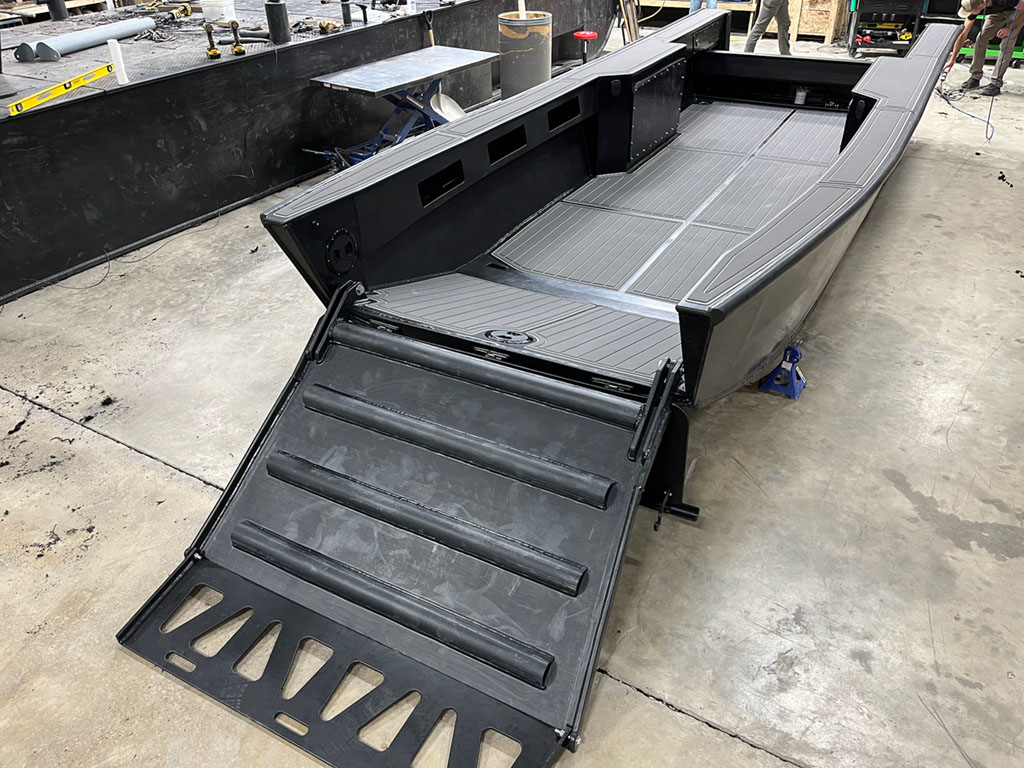
Cold-weather toughness. HDPE has a glass transition temperature well below -100°C (reported values span roughly -100°C to -125°C), so it stays flexible and impact-tough long after metals turn brittle. That is why HDPE pipe is a dependable choice in extreme cold and why the boats perform in Alaska and northern winters.
Melting point and service range. The material softens near 130°C, which is what makes thermoforming and fusion welding possible, and it holds a continuous service range of about -30°C to 90°C. For a fuller picture of where the working limits sit, see our breakdown of the temperature limits of HDPE and HDPE melting point.
HDPE is an excellent electrical insulator with very high volume resistivity, which means it does not conduct. Its dielectric strength for typical grades sits around 20 to 23 kV/mm per manufacturer engineering data such as INEOS typical properties for HDPE. Thin sections and specialty grades can test higher, but 20 to 23 kV/mm is the honest working figure rather than a best-case headline number.
Those insulating properties, combined with near-zero water absorption, are exactly why HDPE conduit is a workhorse for buried power distribution. It is the material protecting the primary and secondary service that utility-approved crews run between the transformer and the meter, and the conduit that goes in the ground when electricians wire new subdivisions and multi-family builds. In both cases the appeal is the same: a non-conductive, moisture-resistant sleeve that will outlast the pavement above it. If you want the deeper dive, we cover the specifics in applications for electrical HDPE conduit.
Chemical resistance. HDPE resists most acids, bases, alcohols, and many solvents, which is why it is trusted for containers and pipe carrying corrosive fluids. One honest caveat worth keeping in mind: HDPE is vulnerable to environmental stress cracking when mechanical stress and certain aggressive agents act together, so grade selection and design still matter.
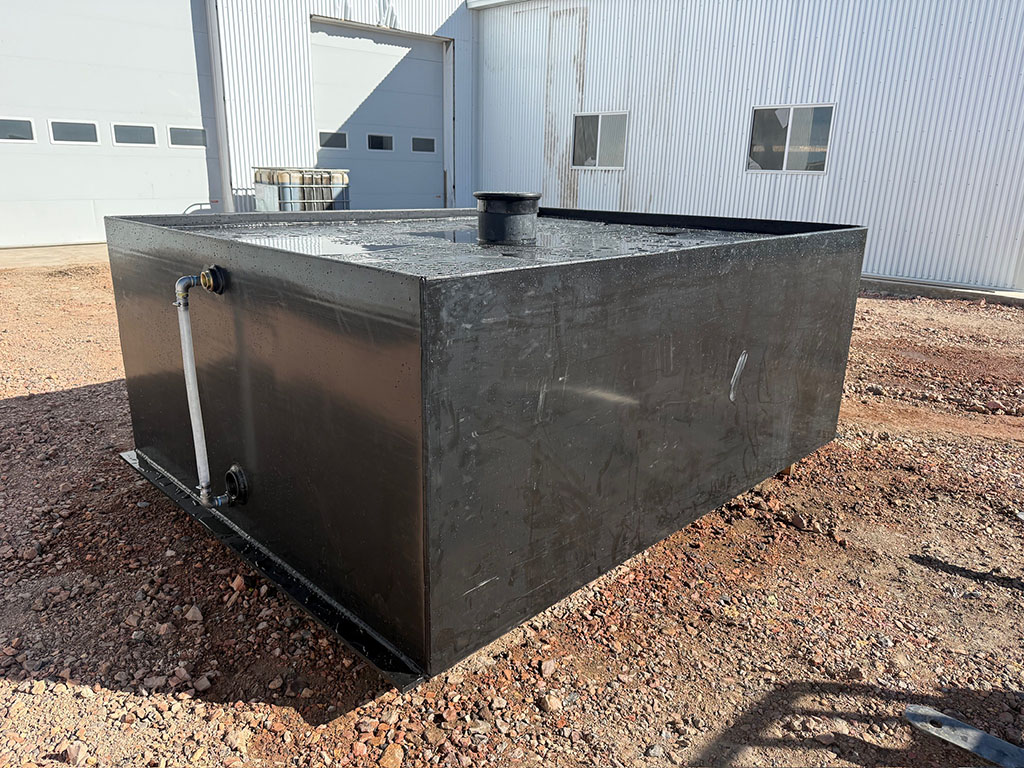
Water absorption. HDPE absorbs less than 0.05% water, so it does not swell, waterlog, or lose integrity in wet service. That single number is a big reason the material is dependable for marine hulls and permanently submerged components, where wood and some composites slowly degrade.
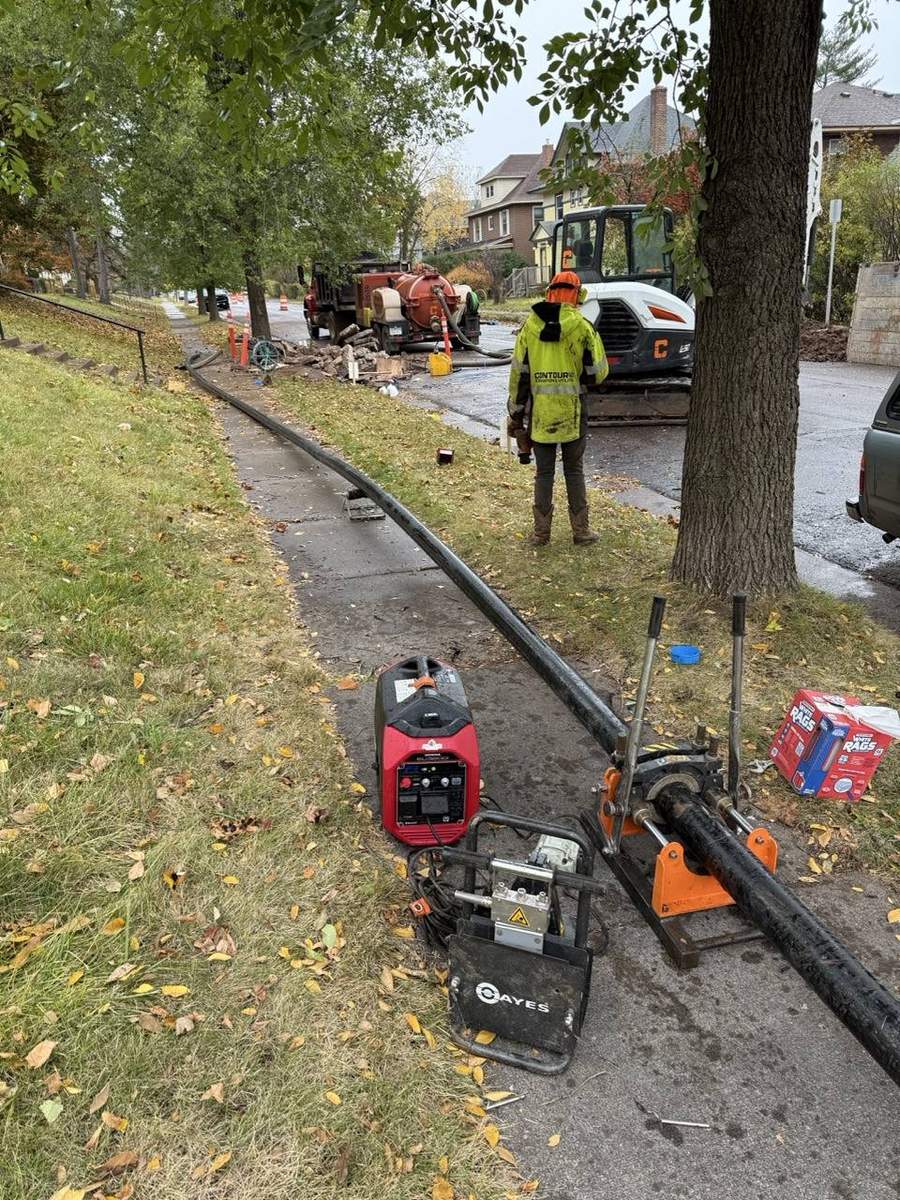
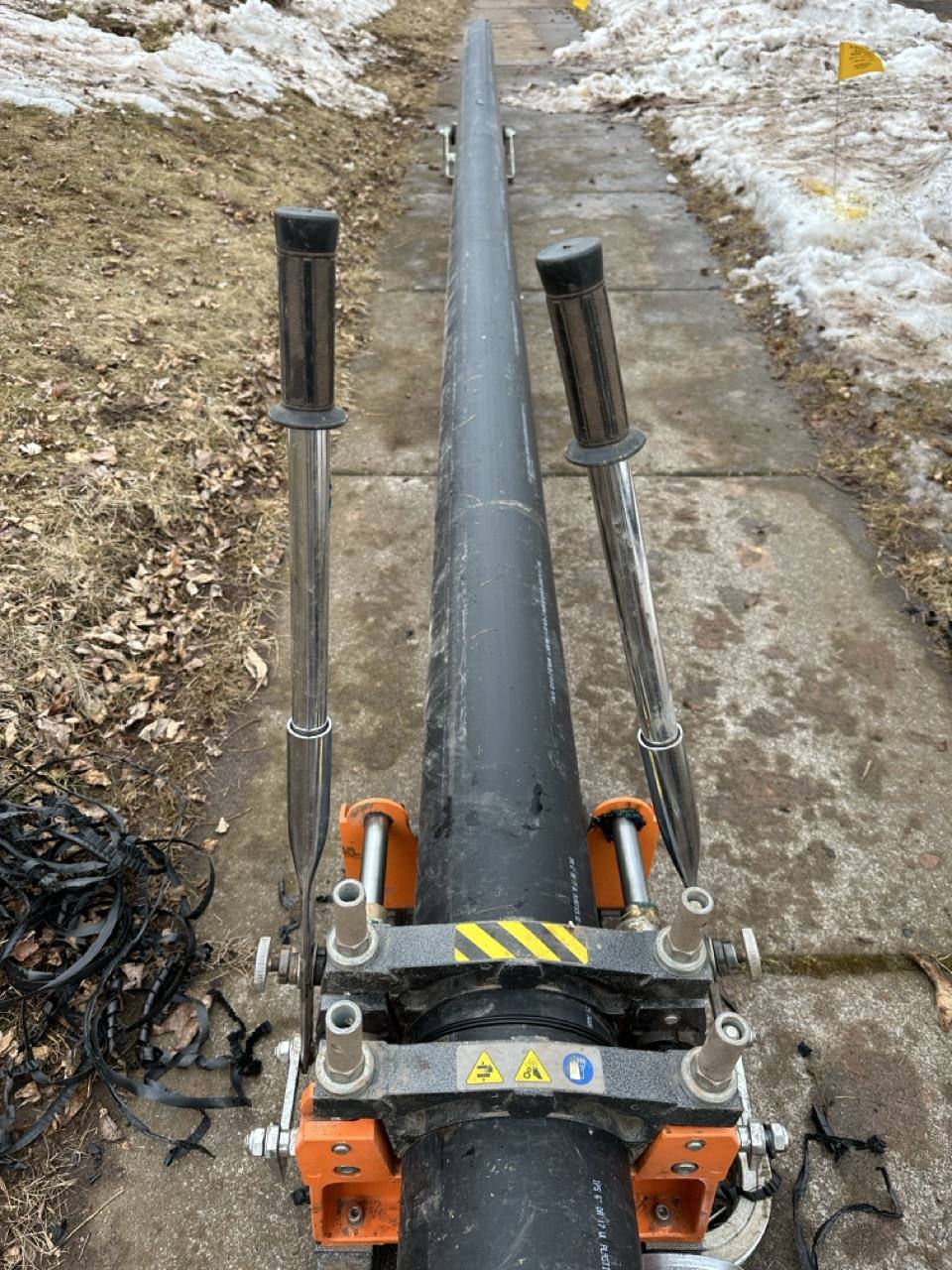
The clearest way to see these properties working together is underground. When a residential sewer line fails, trenchless crews pull one continuous, fusion-welded length of HDPE through the old pipe and fracture the old line outward as they go, replacing the whole run through two small access pits instead of trenching the yard.
That job only works because of the property stack above: HDPE is flexible enough to be pulled through a bore, its heat-fused joints create a seamless line with no couplings to leak or admit roots, and its corrosion immunity is why the Plastics Pipe Institute and municipal water utilities cite service lives in the 50 to 100 year range. Steel and clay cannot do that.
| Property | Unit | Typical value |
|---|---|---|
| Density | g/cm³ | 0.94 to 0.97 |
| Tensile strength at yield | MPa | 25 |
| Elongation at yield | % | 9 |
| Modulus of elasticity (tension) | MPa | 1000 |
| Glass transition temperature | °C | -100 to -125 |
| Melting point | °C | 130 |
| Continuous service temperature | °C | -30 to 90 |
| Dielectric strength | kV/mm | 20 to 23 |
| Water absorption | % | <0.05 |
Values reflect representative extrusion-grade HDPE and will vary by grade, formulation, and test method. Pressure-pipe grades (for example PE4710) are engineered to their own long-term standards. Always confirm against the specific resin datasheet for a given application.
Because HDPE holds its mechanical and chemical properties through reprocessing, recovered pipeline material can be extruded into new sheet and fabricated into structural products without giving up the qualities that made it useful the first time. That is the foundation of how Legacy HDPE operates, and it is why HDPE is genuinely recyclable rather than recyclable in theory only. The same toughness, insulation, and corrosion resistance that define virgin HDPE carry into a second working life.
The four that drive most applications are high impact strength, chemical and corrosion resistance, low water absorption (under 0.05%), and strong electrical insulation. Together they let one material serve boats, pressure pipe, chemical tanks, and buried conduit.
HDPE holds a continuous service range of roughly -30°C to 90°C. It stays impact-tough far below that because its glass transition sits below -100°C, and it softens near 130°C, which is what allows welding and thermoforming.
Yes. HDPE has very high volume resistivity and a dielectric strength of about 20 to 23 kV/mm for typical grades, which is why it is widely used as conduit for underground power distribution.
HDPE resists most acids, bases, and alcohols and does not corrode or rust, which is why it is used for chemical piping and tanks and for water and sewer mains. The main design caution is environmental stress cracking under combined stress and aggressive agents.
HDPE earns its range from a rare combination: it is tough, chemically inert, cold-tolerant, insulating, and recyclable, all at once. That is why the same material ends up in a workboat hull, a buried water main, and an electrical run.
Legacy HDPE builds boats, barges, custom tanks, and fabricated products from recovered and recycled HDPE, with in-house engineering and fabrication from material recovery through delivery. To talk through a project, reach us at Tel: (307) 391-0731.
 Optimized by Seraphinite Accelerator