Skip to content
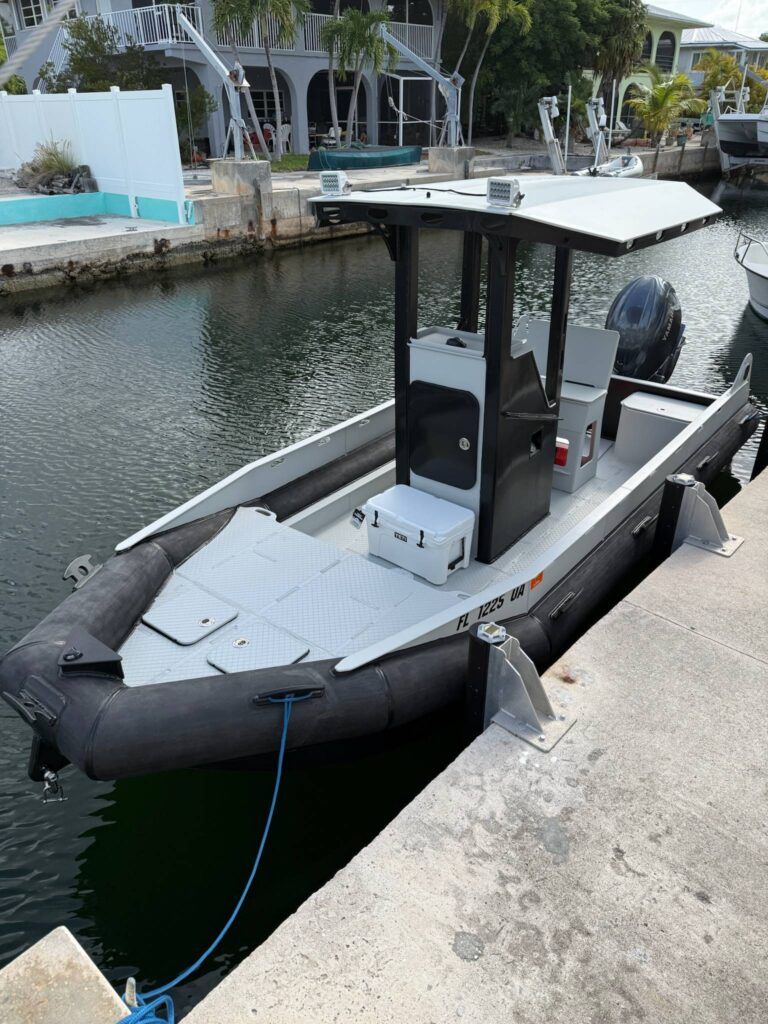
The amount of noise you make can have a significant impact on a fishing trip. Quiet fishing boats make it easier to approach shallow flats, work tight creeks, and drift into position without creating unnecessary hull slap and vibration. For anglers targeting cautious bass, redfish, and other shallow-water species, a quieter approach can provide a meaningful advantage.
HDPE boats have inherent vibration-damping characteristics that give them an advantage over conventional aluminum construction. The difference comes from both the material itself and how the hull is built.
The Aluminum Problem: Water Slap and Resonance
Aluminum is lightweight, durable, and widely used in fishing boats. However, its relatively stiff structure can transmit and radiate impact and vibration efficiently. When an aluminum hull encounters chop or repeated water impact, its panels can vibrate and produce noticeable hull slap and resonance.
The amount of noise varies with hull thickness, panel size, framing, construction, and water conditions. Still, bare aluminum generally provides less inherent vibration damping than HDPE.
Riveted aluminum construction can introduce additional sources of vibration and maintenance concerns. Fasteners and overlapping joints can contribute to transmitted noise, while repeated vibration and impact can eventually loosen rivets and contribute to leaks.
HDPE Hulls: Damping Water Slap Before It Starts
HDPE approaches the problem differently. High-density polyethylene has strong vibration-damping characteristics, allowing it to dissipate more vibrational energy rather than transmitting it as efficiently as a rigid metal structure.
This makes quiet fishing boats built from HDPE particularly well suited to shallow-water environments, where repeated hull impacts and water slap can give away an angler’s position.
Construction also plays an important role. Legacy HDPE hulls use mechanically interlocking panel geometry, with welded joints providing a sealed and reinforced structure. This reduces the number of separate fasteners and overlapping joints found in traditional riveted construction while eliminating one potential source of long-term maintenance.
For anglers comparing HDPE vs aluminum boats, the resulting difference in vibration and hull noise can be one of the most noticeable benefits on the water.
Real-World Example: The L-Series Lightweight in Shallow Creeks
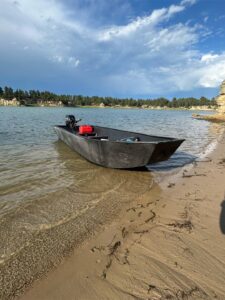
Legacy’s lightweight L-series john boats are designed for shallow-water environments, including tight creeks and backwater flats. Their shallow-draft design makes them well suited to tight creeks and backwater flats.
For guides and anglers working water where fish are easily disturbed, quieter operation can make it easier to approach productive areas without unnecessarily alerting fish. It doesn’t guarantee more hookups, but it can be another advantage when conditions are difficult and fish are cautious.
The Fishing Guide’s Choice
The comparison between HDPE and aluminum boats isn’t only about weight, speed, or initial cost. HDPE’s inherent damping properties and welded construction make it a strong option for anglers looking for quiet fishing boats, particularly when fishing flats, creeks, backwaters, or other environments where a subtle approach matters.
Learn More
Explore Legacy’s fishing-ready HDPE models, including the A15 and new A1660 john boats, designed for anglers and guides who value shallow-water performance, durability, and quiet operation.