Skip to content
Wyoming fire departments cover some of the most demanding water environments around. The Snake River through Teton County runs cold, fast, and unforgiving. The North Platte near Casper surges during spring snowmelt. The Green River below Flaming Gorge carries flow that catches people off guard in high snow years. Every summer, fire and EMS agencies across the state respond to incidents on these waterways, and the fire rescue boat they put in the water determines what they can do when they get there.
What Fire Department Marine Response Teams Need from Their Vessels
Marine rescue for a fire department is not the same mission as recreational boating, game warden patrol, or standard SAR. Fire departments responding to water incidents do so on zero notice, in whatever conditions exist at that moment, with a crew whose primary training is structural firefighting and emergency medical services rather than marine operations.
That operational context drives specific requirements. A fire rescue boat needs to launch fast, with minimal pre-departure checks. It needs to handle rocky, shallow river channels without taking damage that sidelines it for repair. It needs to stay on the water even if something goes wrong, because a capsized or swamped rescue boat that sinks does not help the person in the water. And when the season ends, it needs to go back into service the following spring without a maintenance cycle that competes with the department’s apparatus budget.
Wyoming adds another layer. The nearest marine yard capable of handling hull repair on a commercial workboat is not down the street. When a vessel serving a rural Wyoming fire district needs structural repair, the options are limited and the timeline is long. Every day that boat is being repaired is a day it cannot respond.
Issues Aluminum Accumulates During Operation
Most fire department marine vessels in Wyoming service are aluminum. While it’s functional, familiar, and available, it also corrodes, dents, and accumulates maintenance debt every season it runs.
Spring snowmelt floods carry debris loads that most people do not anticipate. Logs, branches, fence posts, and submerged obstructions move through Wyoming rivers at high flows and regularly make hard contact with hulls. Aluminum dents permanently under that kind of impact. As those dents accumulate, they affect the hull’s geometry, and will eventually need to be repaired, which means yard time.
Fire departments also deploy foam concentrates and suppression agents that are corrosive to aluminum under repeated seasonal use. Manufacturers explicitly recommend against aluminum for storage and handling of foam concentrates, and instead specify HDPE or stainless steel as compatible materials. [3] Foam residue rinses off HDPE hulls without affecting the material.
Then there is the galvanic corrosion problem. Aluminum in contact with the steel equipment and hardware common on fire and rescue apparatus, such as lifting rings, cleats, anchor hardware, and pump mounts, creates electrochemical conditions that accelerate hull degradation. HDPE is dielectric. It does not participate in galvanic reactions. The hull stays inert regardless of what metal hardware is mounted to it. [4]
What HDPE Changes in Practice
Impact recovery is the most immediately obvious difference. An HDPE hull flexes on contact and returns to its original form. The same strike that leaves a permanent dent in aluminum leaves nothing on HDPE except a scuff that cleans off. This means no repair backlog and a fire rescue boat that is readily available for the next call.
The buoyancy property matters specifically in a rescue context. HDPE is less dense than water at 0.93 to 0.97 grams per cubic centimeter. A Legacy hull does not sink under any condition, including a compromised or flooded hull. [4] For a fire department running a two-person crew in cold water, that is the difference between a rescue that turns into a second rescue and one that does not.
Field repairability is HDPE’s biggest advantage, and for Wyoming departments operating far from any marine yard, it may be the most operationally significant. HDPE welds with a heat gun and a matching welding rod. The weld is structural, not cosmetic, and it fuses into the parent material. A hull repair that would pull an aluminum boat for three days of weld work at a qualified shop takes mere hours on an HDPE hull, often at the dock or in the department’s own bay. [5]
NFPA Standards and Specification Considerations
Marine firefighting vessels are governed by NFPA 1910, [6] which covers construction requirements, stability, propulsion, auxiliary systems, and maintenance and inspection criteria for marine vessels used in fire service.
NFPA 1910 is explicit that it is a minimum requirements document, not a purchase specification. The authority that has jurisdiction determines what additional requirements apply based on the intended mission and operating environment. For Wyoming departments writing procurement specifications for a marine rescue vessel, the standard defines the floor, and the operating environment defines how far above that floor the specification needs to reach.
HDPE hull construction addresses several of the material performance requirements that NFPA 1910 reflects in its stability and structural integrity provisions. The hull does not degrade in the chemical and biological environment of river rescue operations, does not require scheduled anti-corrosion treatment to maintain structural integrity, and meets or exceeds the impact resistance requirements applicable to Class A and Class B vessel applications.
Legacy can provide documentation on hull scantlings, material properties, and weld standards to support specification development and AHJ review.
The Best Option for the Mission: The E930
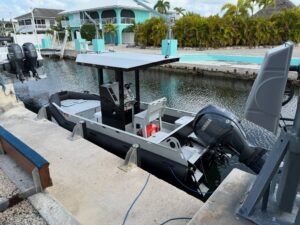
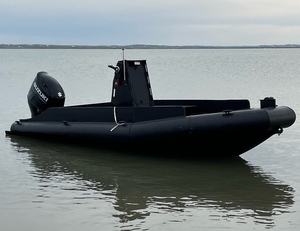
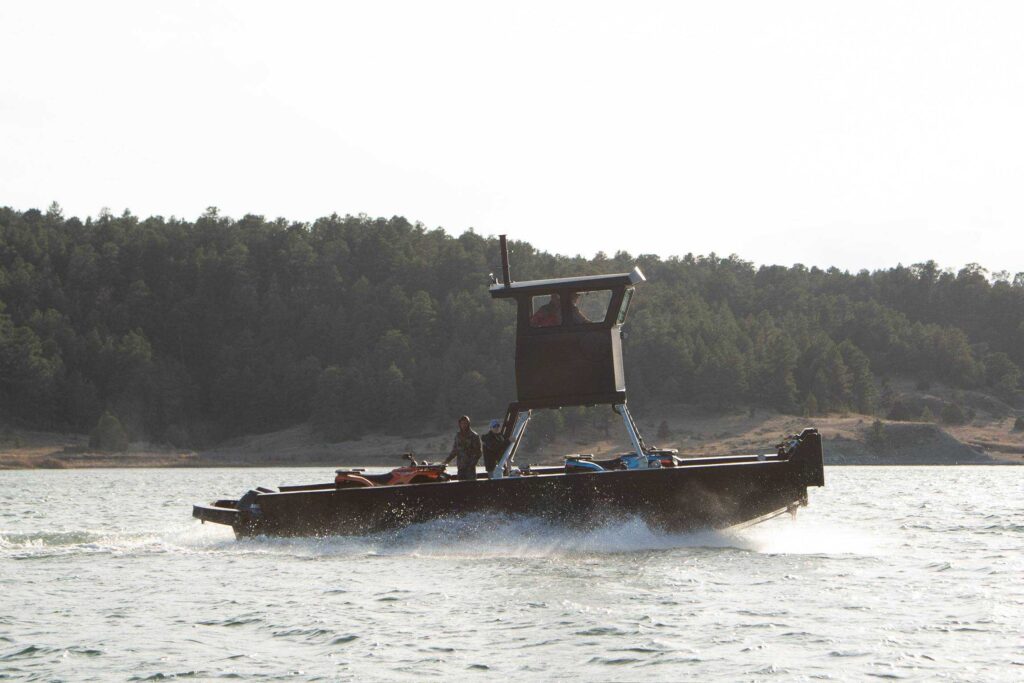
Legacy’s E930 is built from three quarter inch HDPE throughout, hull, floor, and deck, with no corroding metal fasteners anywhere in the structure. It handles extreme conditions including ice, boulders, chemical spills, and high impact collisions. It carries up to ten people with a maximum payload of 3,240 pounds. [7]
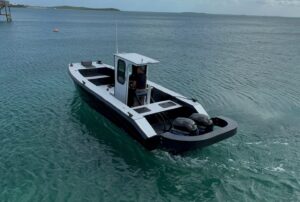
Standard equipment includes navigational lights, bilge pump, fuse panel, 12V battery system with disconnect, and a 99 gallon stern fuel tank. You can also add a 12V 3,500 pound electric winch with console mounted controls, T top for crew protection, davits, bow door for forward personnel access in shallow water rescue, and side cargo gates. The cabin can be configured with up to 74 inches of clearance from deck to cabin bottom, which matters when moving injured personnel aboard quickly.
The 30 foot Ember extends capacity and range for departments serving larger waterways or requiring greater operational endurance, giving Wyoming agencies a fire rescue boat sized for their territory. The hull is built in Wyoming, under one roof, by the same engineering team that designed it. When a department needs a modification, a non standard deck layout, or a hull thickness specification driven by a particular mission environment, that conversation happens with the engineer who can act on it.
A Straight Line from the Material to the Mission
Wyoming’s rivers are not forgiving, and the departments responding to incidents on them need equipment that matches the environment. Legacy builds its fire rescue boats from recycled HDPE pipe recovered from Wyoming oil and gas fields, extruded in house, fabricated under one roof. They last for many years, are easy to repair, and they don’t sink.
If your department is looking to upgrade its rescue fleet, contact Legacy for a quote or a more in depth discussion about what you need for your missions.
Request a Quote
Sources
[1] Teton County, WY. “About Fire / EMS.” Jackson Hole Fire/EMS. https://www.tetoncountywy.gov/864/About-Fire-EMS
[2] Wyoming News / Jackson Hole News and Guide. “Two Recent Deaths in Western Wyoming Rivers Unconnected, Officials Say.” June 2025. https://www.wyomingnews.com/news/local_news/two-recent-deaths-in-western-wyoming-rivers-unconnected-officials-say/article_43772ff3-f599-48c2-9c85-59ac6077382d.html
[3] Interstate Technology & Regulatory Council. “AFFF Fact Sheet: Transition to Fluorine-Free Foam.” Maine Emergency Management Agency / ITRC. https://www.maine.gov/mema/sites/maine.gov.mema/files/inline-files/ITRC%20AFFF%20Fact%20Sheet.pdf
[4] Loyd Shipyard. “Steel, Aluminium, or HDPE: Choosing the Right Hull Material for Your Workboat.” https://www.loydshipyard.com/blog/steel-aluminium-or-hdpe-choosing-the-right-hull-material-for-your-workboat/
[5] Legacy HDPE. “Can an HDPE Boat Be Repaired Easily?” https://legacyhdpe.com/can-hdpe-boat-be-repaired-easily/
[6] NFPA. “NFPA 1910, Standard for the Inspection, Maintenance, Refurbishment, Testing, and Retirement of In-Service Emergency Vehicles and Marine Firefighting Vessels, 2024 Edition.” https://webstore.ansi.org/standards/nfpa/nfpa19102024
[7] Legacy HDPE. “HDPE Boat Ember: HDPE Patrol Boat/Rescue Boat” https://legacyhdpe.com/work-boats/30-ember/