Skip to content


An HDPE hull will not rust, rot, or blister, and there is no gelcoat to baby. The care it does need fits in a few minutes after each trip and an hour or two each season. Here is the whole routine.
Most hull maintenance exists to fight a weakness in the material. Aluminum corrodes. Steel rusts. Fiberglass cracks, blisters, and needs its gelcoat waxed. HDPE skips all of that, so caring for it comes down to four simple jobs: keep it clean, look it over, keep the metal parts on it tight, and fix real damage the right way.
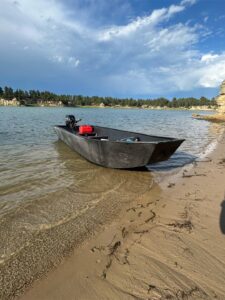
That holds whether you run a small HDPE jon boat on a reservoir, a commercial HDPE work boat on a job site, or a heavy HDPE barge moving equipment. There are a few differences by boat type, and we cover those further down.
Do these three things every time the boat comes out of the water. They take less time than loading the cooler.
- Rinse it with fresh waterHose down the hull, deck, and trailer. Clean marina programs recommend starting with plain water and a sponge or soft, non-abrasive pad before reaching for any cleaner. This matters most after saltwater, brackish water, or muddy job-site water.
- Clean, drain, and dryPull off any weeds, mud, and debris. Pull the drain plug and empty every space that holds water: hull, livewell, bilge. Leave the plug out while you drive home, then let everything dry before you launch somewhere new.
- Walk around and lookTake one lap around the boat. Look at the bow, keel, and chines (the edges where the bottom meets the sides), because that is where rocks, ramps, and beaches leave their marks. You are looking for anything new since last time.
Wyoming Game and Fish says the state remains one of the few in the country without a confirmed zebra or quagga mussel infestation, and inspectors want to keep it that way. Every boat on Wyoming water needs a current AIS decal. Any boat brought into the state from March 1 through November 30, or launched on infested water in the last 30 days, must pass an inspection by an authorized inspector before it launches. In March 2026, inspectors found live zebra mussels on the hull of a boat crossing the state. A clean, dry hull makes your inspection fast.
HDPE does not need special cleaners. In most cases water and a brush are enough. When they are not, keep it simple.
- Fresh water first, every time
- A soft brush, sponge, or non-abrasive pad
- A small amount of phosphate-free, biodegradable soap for stubborn grime
- Baking soda or vinegar for stains, which Sea Grant programs suggest as low-impact options
- Bleach, ammonia, lye, and chlorinated solvents
- Cleaners made from petroleum distillates
- Wax and polish (there is no gelcoat to protect)
- Washing with soap over the water. Wash on land and keep runoff out of the lake or river.
The “skip” list is about protecting the water you fish and work on as much as the boat. Sea Grant clean boating guides tell boaters to avoid ammonia, bleach, chlorinated solvents, petroleum distillates, and lye for exactly that reason.
For a deeper cleaning walkthrough, see our guide on how to clean a polyethylene boat.
An HDPE hull that has been used will be scuffed. That is normal and it is the point. When a hull hits a rock, HDPE tends to flex and slide off rather than crack or tear, and the mark it leaves behind is usually cosmetic.
Here is how to sort what you find on your walk-around:
- Surface scuffs and light scratches: Leave them alone. They do not need sanding, filling, or painting.
- Deep gouges: Keep an eye on gouges along the keel and chines, especially if they keep getting deeper in the same spot. A photo every few trips makes this easy to track.
- Cracks, holes, or a seam that looks separated: Stop using the boat for heavy work and call us.
Polyethylene has a slick, low-energy surface that most glues, resins, and paints do not grip well. Patches that work on fiberglass or aluminum tend to peel off HDPE. Real HDPE repairs are made by plastic welding, which melts new HDPE into the damaged area so it becomes part of the hull. Read more in can an HDPE boat be repaired easily and how to patch and seal a polyethylene boat.
This is where most of your real maintenance time goes. The HDPE hull will not corrode, but the bolts, motor mount, cleats, rails, crane bases, tow points, and trailer parts attached to it are usually metal.
- Check fasteners once a month in season. Plastic and metal grow and shrink at different rates as temperatures swing, so bolts can work loose over time. That is a shop rule of thumb, and it matters more in places with big day-to-night swings like Wyoming.
- Rinse metal fittings after saltwater. The hull shrugs off salt. Stainless and aluminum hardware still appreciate a rinse.
- Watch the motor mount and transom. This area carries the most load and vibration. Look for loose bolts or new movement. Our post on mounting a motor on an HDPE boat covers how that connection is built.
- Support the hull evenly on the trailer. Bunks or rollers should carry the hull along its length. As a rule of thumb, avoid storing a heavy, loaded boat for months on a few small contact points.
Black polyethylene pipe has a long track record outdoors because of carbon black. According to the Plastics Pipe Institute, PE with at least 2% well-dispersed carbon black is considered stabilized against UV, and carbon black is the most common UV stabilizer for long outdoor service. UV mainly affects the outer surface layer of the material.
That is good news for HDPE hulls, but a cover or a shaded spot still costs little and keeps decks, seats, wiring, and electronics in better shape. For more, read do HDPE boats fade or degrade under sunlight.
For boats that live on a trailer, no. Rinse, drain, dry, and you are done.
Boats that stay in the water for long stretches, like aquaculture work boats on a mooring, can still collect growth. Standard antifouling paints are not made to stick to bare polyethylene, for the same reason patch kits fail. If your boat will stay in the water, talk to us before painting anything. Regular cleaning out of the water is often the simpler answer.
Print this, tape it in the shop, and you are covered. Commercial boats running daily should treat “monthly” as “every couple of weeks.”
| Task | After every trip | Monthly in season | Start of season | Before storage |
|---|---|---|---|---|
| Fresh water rinse | Yes | Yes | ||
| Clean, drain, dry (plug out) | Yes | Yes | ||
| Walk-around hull check | Yes | Yes | Yes | |
| Wash with mild soap | Yes | Yes | ||
| Check bolts, mounts, and fittings | Yes | Yes | ||
| Photograph deep gouges to track them | Yes | Yes | ||
| Inspect trailer bunks and rollers | Yes | Yes | ||
| Renew AIS decal (Wyoming) | Yes | |||
| Drain every compartment and store covered | Yes |
HDPE stays tough in the cold, which is one reason it is used for pipe in freezing ground. You can read more in how HDPE boats perform in extreme weather. What causes trouble in winter is trapped water, not the hull.
- Wash the boat and let it dry completely.
- Drain every compartment, livewell, and bilge. Water that freezes in a closed space can stress fittings and hardware.
- Store it with the plug out, under a cover or roof if you can.
- Make sure the trailer or blocks support the hull evenly.
The routine above covers every Legacy hull. Here is what to watch a little closer depending on what you run.
Fishing, hunting, shallow rivers and reservoirs
- The flat bottom takes most of the ramp and beach contact. Check it near the transom and along the chines.
- Drain plugs on small boats are easy to forget. Make “plug out” part of loading up.
- Rinse out fish slime and bait before it dries on the deck.
Patrol, aquaculture, survey, and job-site crews
- Hardware takes the beating here. Check crane bases, push knees, tow points, and rails on a set schedule.
- Boats running daily should do the monthly checks every couple of weeks.
- Clean fuel and oil off decks with absorbent pads, never with soap.
Marine construction, dredging, mining, heavy hauling
- Equipment on deck means wear on deck. Look for gouges where tracks, outriggers, or loads sit.
- Check deck fasteners and any tie-down points after heavy lifts.
- On mining and dredging jobs, rinse out sediment so it does not build up in corners and drains.
Do HDPE boats need to be waxed?
No. Wax protects gelcoat on fiberglass boats. HDPE has no gelcoat, so a rinse and an occasional wash with mild soap is all the hull needs.
Can I use a pressure washer on an HDPE hull?
Yes, on the hull itself. Keep the spray off decals, wiring, seals, and electronics. Inspection stations use hot, high-pressure water to decontaminate boats, so it is a normal part of boat care.
Can I fix an HDPE hull with epoxy or a fiberglass patch?
Not reliably. Most glues and resins do not bond well to polyethylene. HDPE is repaired by plastic welding, which fuses new HDPE into the hull. Call us for anything beyond surface scratches.
Do HDPE boats need bottom paint?
Trailered boats do not. Boats that stay in the water for long periods can collect growth, and standard antifouling paints do not stick well to bare HDPE, so talk to us before painting.
How long does an HDPE hull last?
With the simple routine in this guide, a long time. We break down the details in how long will my HDPE boat last.
Send us a photo or give us a call. We build these boats in Wyoming and we will tell you straight whether it needs a weld or just a rinse.
- Wyoming Game and Fish Department, Game and Fish reminds boaters to Clean, Drain, Dry as AIS inspection season intensifies (2026)
- Wyoming Public Media, Officials identify first boat with zebra mussels this year (March 2026)
- Wyoming Public Media, As boating season gears up, managers ask for help with invasive species (May 2026)
- Lake Champlain Sea Grant, University of Vermont, Boat Cleaning Best Practices
- Lake Champlain Sea Grant, University of Vermont, Be a Good Boating Steward
- Plastics Pipe Institute, TN-47: UV Exposure Limits of Polyethylene Compound
- Plastics Pipe Institute, TR-18: Weatherability of Plastic Pipes