Skip to content

HDPE hulls are known for their durability in saltwater environments, but long-term saltwater exposure allows algae, barnacles, and other organisms to colonize submerged surfaces. Marine growth on HDPE hulls can negatively affect a vessel’s performance, so regular maintenance is important.
What Is Biofouling and How Does It Affect HDPE?
Marine growth, also called biofouling, is the accumulation of microorganisms, algae, and animals on submerged surfaces. This buildup creates a rough, biologically encrusted layer that changes how your hull performs in the water. The consequences extend beyond appearance. Rough hulls increase drag, which means higher fuel consumption to maintain speed. For operators running boats hours each day, these costs add up quickly.
Common types of marine growth include green and brown algae, hard-shelled barnacles, tubeworms, and mussels. In warm saltwater environments, these organisms colonize quickly. Cold water slows the process, but growth still occurs over time.
HDPE has important maintenance advantages in marine environments. Although it is not inherently immune to biofouling, it is resistant to saltwater corrosion and well suited to long-term marine service. Routine cleaning is generally simpler than it is with many traditional hull materials, provided appropriate methods and equipment are used.
Performance Impact of Marine Growth
Marine growth on HDPE hulls can significantly reduce performance when buildup occurs. A heavy accumulation directly affects efficiency. Research shows that rough surfaces from marine growth increase friction between the hull and water. Your engine works harder to push the vessel forward, consuming more fuel at the same speed. Regular cleaning schedules that remove growth before heavy buildup occurs help control the fuel penalty associated with a fouled hull.
Beyond fuel costs, thick biofouling can reduce maneuverability and steering response. In critical situations, this matters. Work boats used for rescue, patrol, or recovery operations need immediate handling responsiveness. Biofouling compromises that performance.
Marine growth can also obstruct water intakes, through-hull fittings, and other submerged components, potentially causing equipment problems if left unchecked.
Maintenance Solutions for HDPE Hulls
Managing marine growth on HDPE hulls comes down to regular maintenance. Hull cleaning is the most practical and cost-effective approach. How often it is needed depends on water temperature, local fouling conditions, and how the boat is used. Boats operating in warm, saltwater environments may need more frequent cleaning than those operating in colder or less biologically active waters.
Professional hull cleaning removes growth without damaging HDPE. The material can generally tolerate routine scrubbing and appropriate pressure washing without the coating-maintenance concerns associated with many painted hulls. This is a major advantage when dealing with stubborn barnacle clusters.
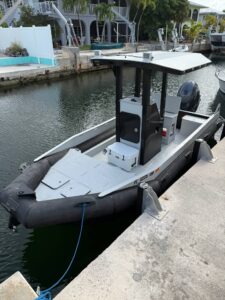
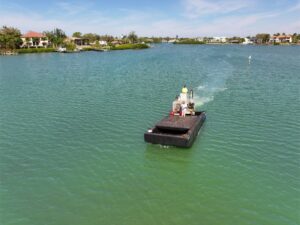
See how professional operators maintain HDPE hulls in saltwater service.
Get Your Saltwater-Ready HDPE Boat
Marine growth is a normal part of operating any boat in saltwater, but it doesn’t have to become a costly problem. With routine cleaning and regular inspections, HDPE hulls remain easy to maintain and continue delivering reliable performance in demanding marine environments.
Legacy HDPE offers work boats and platforms designed specifically for saltwater service. Our vessels are built to perform in the harshest marine environments while staying easy to maintain. Whether you operate in coastal areas, harbors, or open water, we can build a vessel or platform designed for your mission.