Skip to content

High‑density polyethylene (HDPE) is prized for its exceptional strength, durability, chemical resistance, and low weight. As a semi‑crystalline thermoplastic, its microstructure, and thus performance, vary based on processing and additives. Legacy HDPE specializes in high‑quality products engineered for demanding applications, and understanding HDPE’s properties helps illustrate why.
1. Mechanical Properties & Processing
HDPE boasts a high strength‑to‑density ratio: typical yield tensile strength ranges from 25 to 40 MPa and ultimate tensile strength 16–40 MPa; Young’s modulus around 0.4–1.2 GPa and elongation at break of 5–12% under room temperature conditions.
Processing method matters: Compression‑molded HDPE can reach yield strength ~24.5 MPa and 1170% failure strain, compared to 22.3 MPa and 462% for injection molding—due to higher crystallinity (~80% vs. ~75%) and fewer defects..
Blends with polypropylene (PP) show strength and modulus behavior that may be additive or non‑linear depending on process, though ductility (impact strength, elongation) often declines unless toughening elastomers are added, typically reducing the strength/modulus trade‑off.
2. Resistance To Heat, Electricity, And Chemicals
HDPE melts at temperatures ranging from 125°C to 137°C, with a thermal conductivity of around 0.42-0.52 W/m·K and a specific heat of around 1900 J/kg·K.
The low glass transition temperature (~-200 °C to -90 °C) ensures HDPE stays ductile in cold climes.
Thermal expansion coefficient is around 1 × 10⁻⁴ to 2 × 10⁻⁴ /°C (or ~12 × 10⁻⁵ cm/cm °C).
Electrically, HDPE has relative permittivity ≈2.3–2.4, resistivity up to 10¹⁵ Ω·cm, and dielectric strength approx. 420–520 kV/cm.
It has very low moisture uptake (<0.01–0.03% by weight) and excellent resistance to most chemicals, making it suitable for food‑grade and industrial uses.
3. Environmental Behavior and Composites.
Adding rigid fillers, such as carbon nanotubes or graphite nanoplatelets, enhances stiffness and thermal stability while also improving tensile modulus, albeit ductility may suffer.
The use of bio-fillers (such as sawdust with coupling agents) can improve crystallinity and tensile strength while decreasing moisture resistance.The presence of weld lines or PP contamination in recycled HDPE negatively impacts mechanical performance unless compatibilizers are used.
Quick‑View Table: Key HDPE Properties
| Property | Typical Value |
|---|---|
| Density | 930–970 kg/m³ |
| Yield Tensile Strength | 25–40 MPa |
| Ultimate Tensile Strength | 16–40 MPa |
| Young’s Modulus | 0.4–1.2 GPa |
| Elongation at Break | ~5–12% (can exceed 100% in compression molded samples) |
| Melting Point | 125–137 °C |
| Thermal Conductivity | 0.42–0.52 W/m·K |
| CTE | ~1 × 10⁻⁴ /°C |
| Dielectric Constant | ~2.3–2.4 |
| Electrical Resistivity | ~10¹⁵ Ω·cm |
| Water Absorption | <0.03 % |
Conclusion
HDPE delivers an impressive package of mechanical strength, chemical resistance, and thermal stability. It’s clear that processing methods, blend composition, and additives play a huge role in performance. Legacy HDPE takes these factors into account to create products that meet specific engineering requirements.
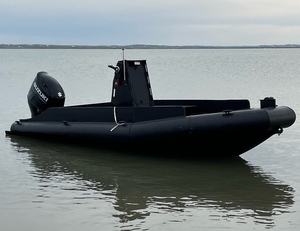
If you’re on the lookout for HDPE solutions, Legacy HDPE has a range of products with optimized formulations just for you. Get in touch to find high-impact boats, insulated piping, or sturdy HDPE sheets. Let Legacy HDPE be your go-to for top-notch solutions!